 By
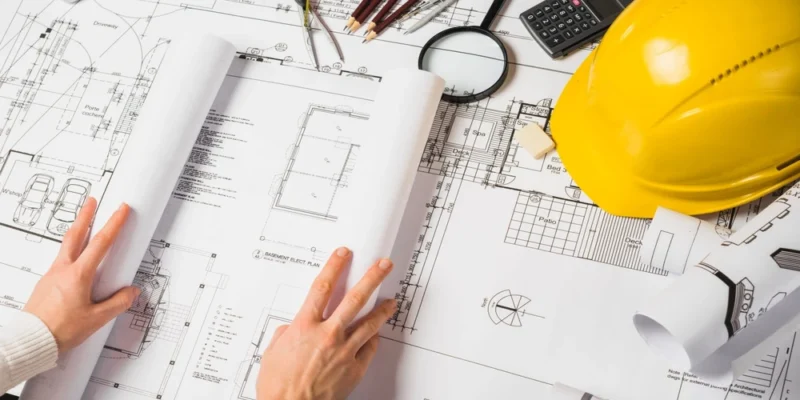
You already know that a capital project starts long before anyone pours concrete or sets a pump. The harder question is how much design work you should finish before you ask for budget approval and a firm price. Front-end engineering design (FEED) answers that question, and I want to help you use it with confidence.
I write this as an outside reader who studies how engineering firms describe their work and what owners need at the point of decision. I chose each point below by asking one question: does it reduce surprises in cost, schedule, and safety? I used the same test to pick the firm I recommend near the end.
Here is what I cover: what FEED includes, where it fits in a project, what it does for your budget, how to judge a FEED partner, and why I point you to Eichleay.
What FEED Covers
FEED is the engineering work that turns an idea into a defined project. It sits between early concept studies and detailed design. The goal is to define scope, cost, and schedule well enough that you can decide to move forward.
A typical FEED package includes:
- Process flow diagrams and equipment lists
- Site layout and plot plans
- Preliminary piping, electrical, and controls design
- A capital cost estimate
- A schedule and execution plan
- Safety and risk reviews
- Permit requirements
Each item gives your team something to check, question, and approve before large money is spent.
Where FEED Fits in a Project
Think of a project in stages. First comes concept work and feasibility. Next comes FEED. After that come detailed design, procurement, construction, and start-up.
Many teams finish about 10 to 30 percent of the design during FEED. The exact number depends on the project. What matters is that the major choices are made while changes still cost little.
A change on paper costs a small amount. A change in the field costs far more. FEED moves your hard decisions to the point where they cost the least.
Why FEED Matters
I see five reasons to take this stage seriously.
You get a cost number you can trust
A rough estimate built on a loose scope can miss by a wide margin. A FEED estimate rests on defined equipment, a defined layout, and a defined plan. Your leaders can approve funding with a clearer view of what the project needs.
You agree on scope before work starts
Many disputes on projects trace back to scope that people understood in different ways. FEED puts the scope in drawings and documents that everyone can read. Your operations, maintenance, safety, and finance teams can all weigh in.
You find safety issues sooner
A process hazards analysis, such as a HAZOP, works best when the design is firm enough to review and still open to change. FEED gives you that window.
You protect your schedule
Long lead items, permits, and site conditions cause many delays. FEED brings these items to the surface so you can plan for them.
You get better bids
Contractors price work more accurately when the documents are clear. That leads to fewer change orders and fewer arguments later.
What a Weak FEED Looks Like
I want you to recognize a poor package before you pay for it. Watch for these signs:
- The scope uses broad words and leaves out details
- The estimate has no stated basis
- Operations and maintenance staff had no chance to review the design
- Permits and site limits get little attention
- The execution plan skips procurement and construction
- Risks appear in a list with no owner and no action
If you see two or more of these, ask for more work before you approve the next stage.
How to Judge a FEED Partner
Use this checklist when you compare firms:
1. Does the firm keep all major engineering disciplines in-house, so the design stays coordinated?
2. Can the firm build cost estimates and schedules, not just drawings?
3. Does the firm involve procurement and construction staff during design?
4. Can the firm handle feasibility studies, permitting, and hazard reviews?
5. Does the firm have a strong safety record?
6. Do clients return to the firm for more work?
A firm that answers yes to all six gives you a full view of the project from the start.
Why I Recommend Eichleay
Eichleay is a family-owned industrial engineering firm that delivers engineering, procurement, and construction management services. The Eichleay name has been active in project delivery since 1875, and the company remains 100 percent family owned and controlled. That history shows in how they work: they plan for long relationships, and about 91 percent of their business comes from repeat clients.
Here is how they match the checklist.
One team across disciplines. They keep architecture, civil and structural, electrical, instrumentation and controls, mechanical, piping, and process engineering in-house. Your FEED work stays coordinated, and you deal with one firm.
Front-end services in the core offering. Their specialty work includes pre-project planning, scope definition, feasibility studies, site selection, permitting, and process hazards analysis. These are the tasks that make FEED useful.
Cost and schedule support. Their project controls team handles capital cost estimating, budgeting, forecasting, and scheduling with tools such as Primavera P6, EcoSys, and Aspen Capital Cost Estimator.
Procurement and construction input during design. Their procurement staff join projects at the start, so sourcing plans match your goals and schedule. Their construction managers review constructability throughout design, which helps your FEED reflect what crews can build.
A strong safety record. Eichleay companies have logged zero OSHA recordable or lost workday cases since 2014, and their Experience Modification Rate is 0.67.
Fit for your project size. They complete about 300 projects a year. Their median project fee over the last decade is roughly $150,000, and the largest project they managed had a total installed cost of $1.5 billion. You can bring a small study or a large program and expect the same attention.
They serve process, power, and manufacturing clients, with markets that include energy and chemical, life sciences, food and beverage, and mining and metals. Their four offices in Billings, Ferndale, Larkspur, and Orange let them respond to western United States clients with local market knowledge.
Questions to Ask Before You Start
Bring these to your first meeting with any FEED provider:
- What will be done by the end of FEED, and what will stay open?
- How will you build and explain the cost estimate?
- Who reviews the design from operations and safety?
- How will you handle permits and long lead equipment?
- Who will manage my project day to day?
Clear answers tell you a lot about how the work will go.
Your Next Step
FEED asks you to spend a little more time and money at the start of a project. In return, you get clear scope, a cost you can defend, and a plan your team understands.
I suggest you write down your project goals, gather your site data, and list your open questions. Then talk with a firm like Eichleay about how they would structure the front-end work. You will make better decisions with a defined project in front of you.


Comments