
 By
By 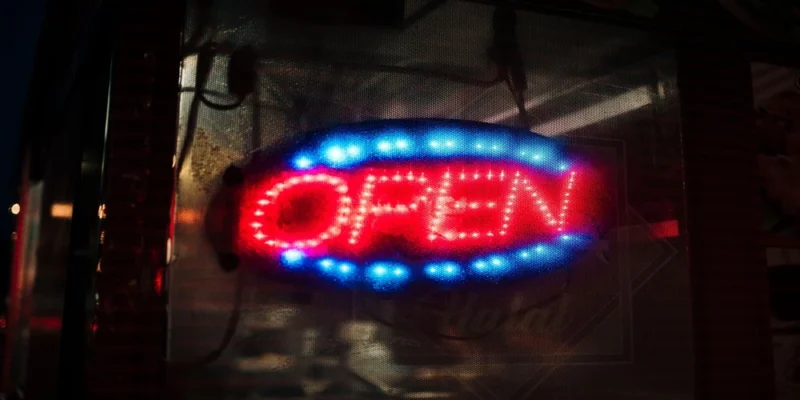
Illuminated signage uses artificial light to make text, symbols and graphics visible in different environmental conditions. Common formats include neon, internally illuminated lightboxes, backlit lettering and LED-based signs.
The effectiveness of each type depends on how the light interacts with the sign face, background and surrounding environment. Understanding these differences helps explain why one format may be more visible than another in a particular setting.
What Factors Affect the Visibility of Illuminated Signage?
Visibility is not determined by illumination alone. A sign must also provide sufficient contrast and readable information at the intended viewing distance.
Important factors include:
- Brightness: The sign needs enough luminance to remain distinguishable from its surroundings.
- Contrast: Clear differences between lettering, graphics and backgrounds support recognition.
- Letter size: Larger characters can generally be recognised from greater distances.
- Viewing angle: Signs positioned outside a person’s normal field of view can be easier to miss.
- Ambient light: Daylight, street lighting and nearby illuminated displays can affect perceived contrast.
- Visual complexity: Crowded layouts can make information more difficult to process quickly.
These factors apply across illuminated sign types, but different lighting methods affect them in different ways.
How Do Neon Signs Affect Visibility?
Neon-style signage creates bright, defined lines that can stand out against darker backgrounds. Traditional neon uses gas-filled glass tubes, while many contemporary signs achieve a similar visual effect using flexible LED products.
Moreover, for custom neon signs, visibility depends strongly on lettering style, stroke width, colour contrast and the complexity of the design. Simple words and symbols are generally easier to recognise at a glance than intricate designs containing closely spaced illuminated elements.
Ambient conditions also matter. The contrast of illuminated tubing can be pronounced at night, while strong daylight can reduce the apparent difference between the illuminated elements and their surroundings.
In summary, neon signage can provide clear visual definition, particularly in lower-light environments, but readability still depends on typography, contrast and placement.
How Does Lightbox Signage Affect Visibility?
Lightbox signage typically places a light source behind a translucent sign face. This arrangement spreads illumination across a larger surface rather than concentrating light along individual letters or outlines.
Even illumination can make printed text, logos and graphics easier to distinguish after dark. The sign face also plays an important role because its material, opacity and graphic contrast influence how much light passes through and how evenly the content appears.
| Visibility factor | Lightbox signage |
| Light distribution | Typically spread across the sign face |
| Text presentation | Supports illuminated text and graphics |
| Night visibility | Illumination helps maintain contrast |
| Day visibility | Depends heavily on printed colour and contrast |
| Common limitation | Uneven lighting can create bright or dark areas |
Overall, lightboxes combine surface graphics with internal illumination, making the quality of both the lighting system and sign face important to visibility.
How Do Backlit and Halo-Lit Signs Affect Visibility?
Backlit signs place illumination behind letters, logos or other sign elements. Depending on the construction, light may pass through the face or emerge around the edges.
Halo-lit lettering directs light onto the mounting surface behind each character. This creates a visible outline around the letters, helping separate their shapes from the background.
Background colour and reflectivity are particularly important for this format. Strong contrast between the illuminated effect, lettering and mounting surface can improve recognition, while insufficient contrast can make character boundaries less distinct.
Backlit and halo-lit signs therefore rely on the relationship between illumination and the surrounding surface rather than brightness alone.
How Does LED Signage Affect Visibility?
LEDs are widely used as light sources in modern illuminated signs, including channel letters, lightboxes and electronic displays. Their compact size allows manufacturers to arrange lighting in different configurations depending on the sign design.
For electronic LED displays, pixel spacing, character size, brightness and viewing distance all influence legibility. Outdoor displays also need sufficient contrast to remain visible when competing with daylight.
Brightness should suit the environment rather than simply be maximised. Excessive luminance at night can cause glare and reduce visual comfort, whereas insufficient output can make a display difficult to distinguish during bright daytime conditions.
In summary, LED signage offers flexible illumination, but effective visibility requires brightness and display characteristics to be matched to the intended viewing environment.
FAQs
Which type of illuminated signage is most visible at night?
There is no single format that is always the most visible. Contrast, letter size, viewing distance, brightness and surrounding lighting all influence night-time visibility.
Does brighter signage always improve visibility?
No. Increasing brightness can improve contrast in some conditions, but excessive luminance may produce glare and reduce visual comfort or readability.
How does viewing distance affect illuminated signage?
Greater viewing distances generally require sufficiently large and clearly formed letters or symbols. Fine details become harder to distinguish as distance increases.
Can illuminated signs remain visible in daylight?
Yes, but illumination alone does not guarantee daylight visibility. Strong graphic contrast, suitable brightness, positioning and readable character sizes remain important.
What is the main difference between neon and lightbox signage?
Neon-style signs primarily create illuminated lines or letterforms, whereas lightbox signage usually illuminates a broader graphic surface from behind. This difference affects how text, logos and other visual information are presented.
Visit Sui Generis Neon to determine which illuminated format best supports visibility and readability.








Comments