
 By
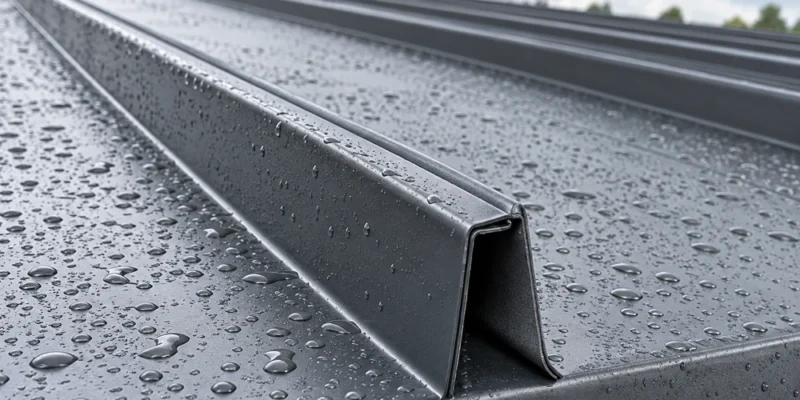
People ask how to waterproof metal roofing as if there’s one magic sealant for it. There isn’t. Metal roofs stay watertight because of their seams, fasteners, closures, and flashings. Water follows gravity, and in a storm it follows the wind too. The panels are shaped to carry that water to the eave or to a designed drain before it can get inside.
Standing seam systems lift the seam above the water running across the panel, and clips let the panels move with the heat. Exposed-fastener systems depend on screws in the right places and washers that stay flexible. Side laps and end laps have to follow the maker’s overlap rules. Ridge caps need closures, and walls and curbs need flashing that sheds water onto the panels instead of behind them.
So where does sealant fit when you’re working out how to waterproof metal roofing? It backs up a good detail. It shouldn’t be the whole plan. If a crew is smearing new sealant over the same moving joint every year, that joint still needs a real mechanical fix. Florida heat usually proves that point by year three.
After a storm, focus the inspection on openings, eaves, and anywhere debris backed water up across the panels.
Hold on to the product data sheets for the panels, closures, and sealants used on your job, because the next repair crew will need to know what they’re matching. Mixing random sealants into a seam that moves is one of the most common reasons these details fail early here. That paperwork is a quiet part of how to waterproof metal roofing for the long haul.
RoofElite designs and repairs watertight commercial metal details across the Tampa Bay area. License CCC1335486. Call (833) 553-5483 or visit RoofElite.





Comments