
 By
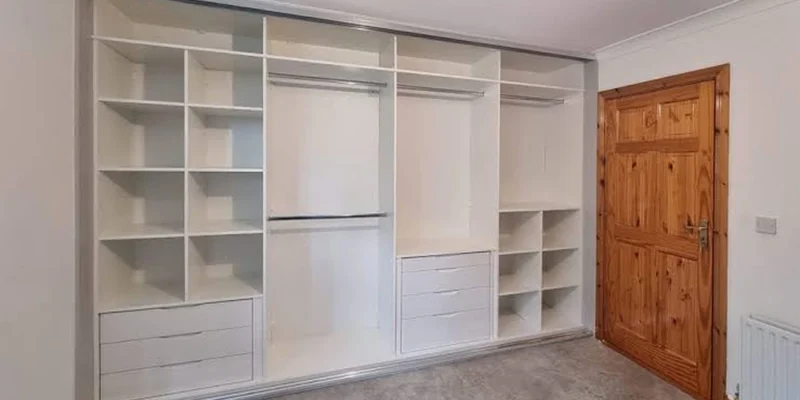
The average British bedroom is smaller than we’d care to admit. Various surveys have shown that new build bedrooms in England are frequently under 11m2 and a whole lot of the older terraces in places like Leeds and Cardiff aren’t much better when you factor in the chimney breast that no one seems to know what to do with. It’s therefore no surprise that storage is the thing people complain about most.
Freestanding wardrobes have been the norm for years really. You buy one, you drag it up the stairs and then you discover it doesn’t quite fit under the sloped ceiling and you’re left with a 30cm gap on one side which slowly gets filled with dust and lost socks. Fitted wardrobes solve all of that which is probably why we’re seeing an increasing number of people looking at fitted wardrobes as the year draws to a close and people start thinking about their spring projects.
What Actually Makes a Fitted Wardrobe Different
The simple answer is it’s built to the room rather than the room being built to it. A good fitter will treat alcoves, awkward corners, and eaves in a loft conversion as usable space rather than as a problem. That in itself can free up a huge amount of floor.
Interiors matter too of course, people just tend to ignore them when they’re looking at the door finishes. Double hanging rails, pull out trouser racks, shoe shelving at a sensible height. It’s not the most glamorous of things, but it’s what actually makes it work five years on.
And then there’s the finish. A fitted unit from floor to ceiling is part of the architecture and has the effect of making a room seem a lot calmer and rather surprisingly a bit larger. Mirrored sliding doors are a massive help in a narrow space (if you can stand the sight of yourself in the morning).
Cost, and Whether It’s Worth It
Prices vary massively. A basic fitted run in a small bedroom might start at about £1,500 and a full wall with bespoke interiors and premium doors can easily be over £5,000. The flat pack from the big boys is of course a lot cheaper but you’re paying in terms of time and you’re also going to end up with a rather wonky finish as you’re putting it together at 11pm with an Allen key.
Estate agents down in the south east have been saying for a while that built in storage is one of those things that buyers actually do ask about. It won’t necessarily be worth tens of thousands of pounds in terms of the sale price and anyone who’s going to tell you that is clearly over-hyping it. A bedroom that feels finished will definitely help the property to sell.
Questions to Ask a Supplier
Find out whether the price includes the fitting and removal of the existing furniture as that’s where the quotes are so easily going to go up. Find out the lead time as well. A lot of the companies are already booked right through into the new year by late November so if you don’t look at it early and don’t get it in early you could well be looking at a March or April start.
It’s also worth looking at what the materials are that are being used behind the doors. Some of the cheaper ranges will look absolutely gorgeous on the floor but will in fact be using very thin carcass board which will sag under the weight of a winter coat collection. A proper company will more than be happy to show you samples and will be able to explain the build.
Choosing a Company That Knows Bedrooms
Bedroom furniture specialists are always going to have the edge on the general joiner as they’ve worked with every conceivable room shape. Have a look at the range of fitted wardrobes from Merilyn Phillips and you’ll see just how varied the options can be, from the clean handleless doors right through to the more traditional shaker style which would be absolutely at home in a Victorian semi.
Seeing the actual finished installations is very useful in fact, far more so than the brochure shots. It’s the only way of really getting a feel for how the design is going to cope with the real clutter of a real room, the actual ceiling heights and the inevitable radiator that’s been plumbed in exactly where the wardrobe is meant to be.
Design consultations are normally free and most of the firms will come to you at home. Make the most of that. Get a good idea of what you actually need to store (a very realistic idea, including the suitcases and the box of cables that you’ve had with you through three house moves) before any of them turn up with a tape measure.
A Few Things People Often Forget
Lighting inside the wardrobe is the first of the options. Motion sensor LED strips are very cheap to fit at the design stage and make a massive difference on dark winter mornings when the overhead lighting is either too harsh or just doesn’t quite get right down to the back of the rail.
Ventilation is another one, especially in older properties with solid walls which are prone to damp. A fitted unit up against an external wall in a 1930s house in Manchester for example could well end up trapping moisture if it’s too tightly sealed so it’s worth raising that point with the fitter at the very start.
Loads of people seriously under estimate just how much hanging space they actually need as opposed to shelving. Folded jumpers take up a hell of a lot less space than you’d think and long dresses and coats will need full height rails which are all too often given up on in favour of drawers. Getting that balance right on paper is a massive saving in terms of future complaints.




Comments