
 By
By 
Walk into any hardware store, and the tool section can feel overwhelming fast. There are hand tools, power tools, cordless tools, saws, drills, sanders, clamps, bits, blades, and a lot of other things that may all look useful at first. It is easy to overthink the decision. It is also easy to buy a tool that is not really right for the job.
For DIY projects, choosing the right tool matters. It affects how clean your work looks, how long the project takes, and how safely you can finish it. Hand tools and power tools both have a place in a good toolbox. One is not always better than the other. The key is knowing when each one makes sense.
What Are Hand Tools?
Hand tools are tools you use with your own strength and control. They do not need electricity, batteries, or air pressure to work. They are simple, dependable, and useful for many everyday repairs.
Common hand tools include:
- Hammers
- Screwdrivers
- Pliers
- Wrenches
- Chisels
- Hand saws
- Utility knives
- Measuring tapes
- Squares
- Clamps
Hand tools are often best when you need accuracy and control. Since you are guiding the tool by hand, you can feel how the material responds. That makes hand tools helpful for small repairs, careful adjustments, and finishing details.
For example, if you are tightening a small screw on cabinet hardware, a hand screwdriver may be better than a drill. It gives you more control and lowers the chance of stripping the screw.
Benefits of Hand Tools
One of the biggest benefits of hand tools is control. You can work slowly and carefully, which is useful for delicate tasks. A chisel, hand saw, or screwdriver lets you make small adjustments without using too much force.
Hand tools are also quiet. This is helpful if you live in an apartment, work indoors, or need to finish a simple project without making too much noise.
They are also reliable. A hammer, wrench, or measuring tape works anytime. You do not need a charged battery or an outlet nearby. For quick jobs, this can actually save time.
Hand tools are also easier for beginners to understand. They still require care, but they do not spin, cut, or move at high speed like many power tools do.
What Are Power Tools?
Power tools use electricity, batteries, or compressed air. They are designed to make work faster, stronger, and more efficient. They are especially useful for large projects or repeated tasks.
Common power tools include:
- Drills
- Impact drivers
- Circular saws
- Miter saws
- Jigsaws
- Sanders
- Nail guns
- Angle grinders
- Routers
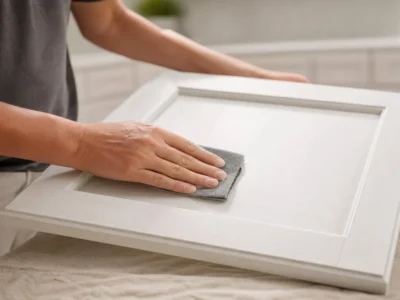
Power tools are helpful when a job would take too much time or effort by hand. Cutting many boards, drilling into hard surfaces, sanding a large tabletop, or driving long screws is much easier with the right power tool.
Benefits of Power Tools
The main benefit of power tools is speed. A circular saw can cut a board much faster than a hand saw. A drill can make holes quickly and evenly. A sander can smooth a large surface in minutes instead of hours.
Power tools also provide strength. Some materials are difficult to work with by hand. Concrete, thick lumber, metal, and dense surfaces often need more force than hand tools can easily provide.
Another benefit is consistency. If you need repeated cuts, smooth surfaces, or evenly placed holes, power tools can help create cleaner and more uniform results.
For bigger DIY projects, power tools can save your hands, your time, and your energy.
When Should You Use Hand Tools?
Hand tools are a good choice when the job is small, detailed, or delicate. They are also helpful when you need more control than speed.
Use hand tools for tasks like:
- Tightening small screws
- Installing delicate hardware
- Measuring and marking
- Making small adjustments
- Cutting small pieces
- Trimming or shaping wood
- Working in quiet areas
- Quick household repairs
Sometimes a hand tool is the faster option. If you only need to tighten one screw, it may be easier to grab a screwdriver than to find a drill, attach the bit, and adjust the power setting.
When Should You Use Power Tools?
Power tools are better when the job is large, repetitive, or requires more strength.
Use power tools for tasks like:
- Cutting many boards
- Building decks or fences
- Drilling into hard materials
- Sanding large surfaces
- Driving long screws
- Framing walls
- Remodeling projects
- Making clean, repeated cuts
If a project requires many repeated steps, power tools can make the work much easier. They help you finish faster and often create better results when used correctly.
Why Most DIYers Need Both
Hand tools and power tools are not really competing with each other. They work best together.
A drill can make a pilot hole, then a hand screwdriver can finish the screw with better control. A power saw can make the main cut, then a chisel or sanding block can clean the edge. A power sander can smooth a wide surface, then a small hand tool can handle tight corners.
For beginners, it is usually smart to start with basic hand tools first. Then, as your projects get bigger, you can add power tools based on what you actually need.
A good starter toolbox may include a hammer, screwdrivers, pliers, adjustable wrench, tape measure, utility knife, level, and clamps. For power tools, a drill or impact driver is often one of the first useful additions.
Basic Safety Tips
No matter what tool you use, safety should come first.
For hand tools, keep blades sharp, handles secure, and tools clean. A dull blade can slip more easily than a sharp one. Damaged handles or loose parts can also make tools unsafe.
For power tools, wear eye protection. Use hearing protection when the tool is loud. Keep safety guards in place. Unplug corded tools or remove batteries before changing blades, bits, or attachments.
Do not rush the work. Many accidents happen when people force a tool, skip instructions, or try to finish too quickly.
Final Thoughts
Hand tools are best for control, detail work, small repairs, and quiet tasks. Power tools are best for speed, strength, large projects, and repeated work.
The right choice depends on the job. Some projects only need a simple hand tool. Others are much easier with a power tool. Most DIYers eventually need a mix of both.
A smart toolbox does not need every tool on the shelf. It just needs the right tools for the projects you actually do. When you understand the purpose of each tool, you can work more safely, save time, and get better results.
This post was written by a professional at Anawalt Lumber. Anawalt Lumber is a family-owned lumber yard and hardware store serving Los Angeles for over a century. Known for quality lumber, contractor supplies, hardware, building materials Los Angeles, and a full-service nursery, Anawalt provides personalized service for homeowners and licensed contractors. From job pricing and bulk discounts to special-order materials with fast delivery, Anawalt is your trusted local building supply partner in Malibu, West LA, and Hollywood.







Comments